
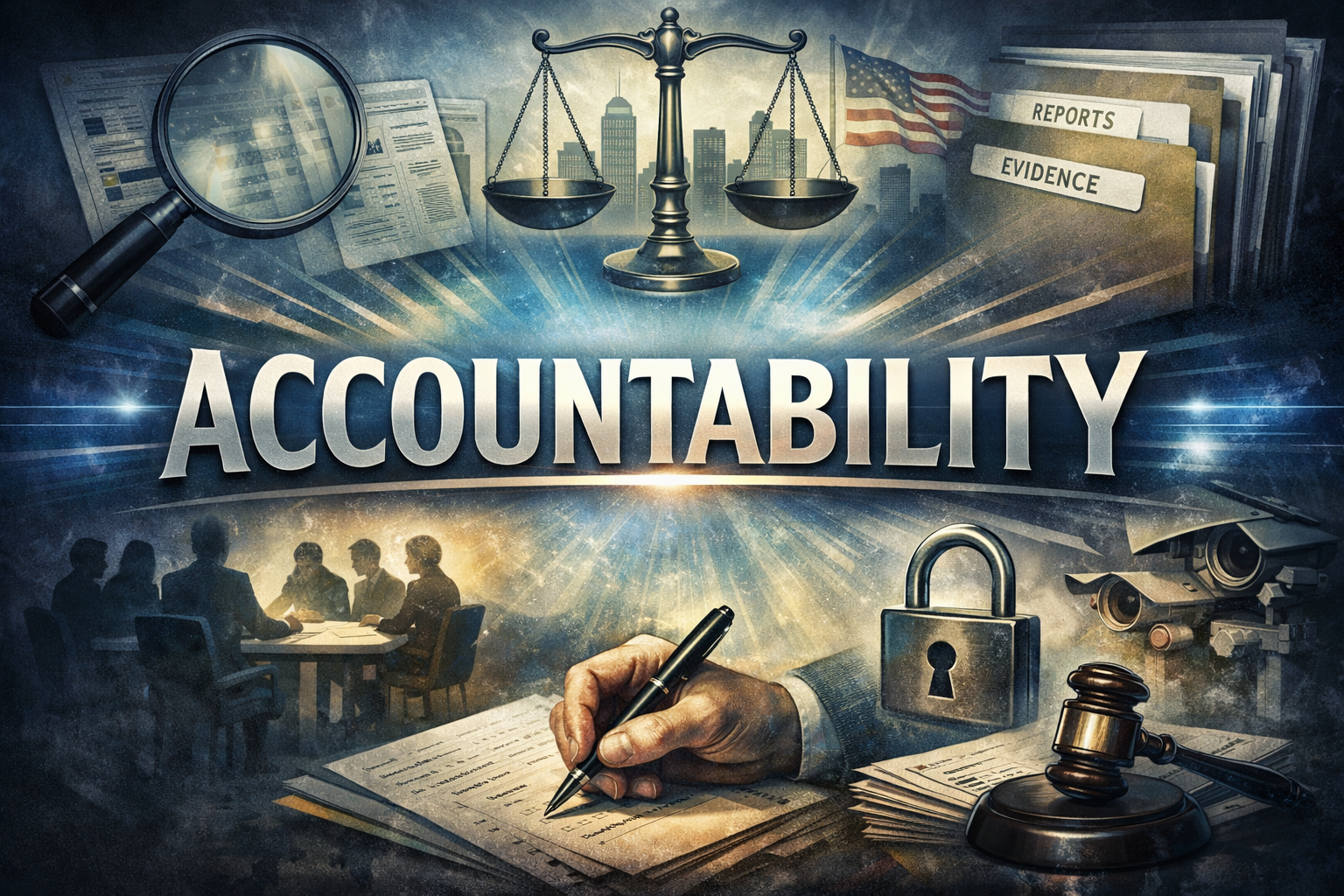
In every community, people are told that if something goes wrong, there is a system in place to correct it.
We are told there are agencies to report misconduct, courts to resolve disputes, oversight bodies to ensure fairness, and public officials who answer to the people. In theory, that structure is supposed to protect the public. In practice, many people have learned that when the problem involves local power, institutional loyalty, record manipulation, retaliation, or silence, the system does not always work the way it is supposed to.
That is why a grassroots accountability organization is needed.
A grassroots accountability organization exists because ordinary people often do not have the money, influence, or connections required to force attention onto serious problems. When records are inaccurate, when complaints are ignored, when patterns of misconduct are hidden behind procedure, and when individuals are left to defend themselves alone, the gap between what the system promises and what people actually experience becomes impossible to ignore.
Grassroots accountability begins with a simple idea: the public should not have to depend entirely on the same institutions that may have failed them in order to document the truth.
Communities need independent structures that help people preserve records, organize facts, identify patterns, and bring attention to misconduct in a disciplined and credible way. They need places where information can be gathered responsibly, where individuals can learn how to protect themselves, and where public trust is built through transparency rather than blind faith.
A grassroots organization is different from a traditional institution because it begins with the people closest to the problem.
It listens to those who have been ignored.
It documents what others dismiss.
It looks for patterns where others see isolated incidents.
It creates structure where people have been left in confusion.
And it helps turn scattered complaints into organized records that can no longer be easily brushed aside.
This kind of work matters because accountability does not happen automatically. It must be built.
Without documentation, there is no record.
Without a record, there is no pattern.
Without a pattern, there is no pressure.
Without pressure, institutions often do not change.
That is why grassroots accountability organizations play such an important role. They help bridge the gap between private harm and public understanding. They help individuals move from feeling powerless to becoming organized. They help communities transform frustration into lawful, fact-based action.
They also help people understand that accountability is not only about exposing wrongdoing. It is about restoring standards.
It is about insisting that records be accurate.
That procedures be followed.
That officials be answerable.
That people not be discredited or discarded simply because they lack status or influence.
That truth be evaluated on evidence, not convenience.
In today’s world, grassroots accountability is more important than ever.
Technology has changed the landscape. More interactions leave digital footprints. More records exist than ever before. More people are capable of documenting events, preserving data, and comparing patterns across time and place. Information that once disappeared can now be retained, organized, and analyzed. Communities have tools they did not have before.
At the same time, the risks are also greater. Harm can be more coordinated, more hidden, and more difficult for one person to confront alone. That is exactly why people need organized support networks rooted in evidence, discipline, and shared purpose.
A grassroots accountability organization gives people a place to begin.
It gives them language when they have been silenced.
It gives them structure when they have been overwhelmed.
It gives them support when they have been isolated.
And it gives them a way to turn lived experience into documented reality.
This is not about encouraging chaos or suspicion. It is about encouraging responsibility.
Responsibility to document carefully.
Responsibility to verify what can be verified.
Responsibility to separate fact from assumption.
Responsibility to use lawful tools, public records, free speech, and organized advocacy in ways that strengthen credibility rather than weaken it.
When people come together around those principles, they create something powerful: a network that is harder to intimidate, harder to discredit, and harder to ignore.
That is what a grassroots accountability organization should be.
Not a place for noise.
Not a place for panic.
Not a place for empty outrage.
But a place for records.
A place for structure.
A place for training.
A place for support.
A place for truth pursued with discipline.
Communities do not become safer simply because someone in authority says they are. Trust is not restored by slogans. It is restored when people know there is a real mechanism for documentation, review, and exposure when standards are violated.
That is why a grassroots accountability organization is necessary.
Because the public deserves more than promises.
It deserves a process.
It deserves a record.
It deserves a voice.
And it deserves a network strong enough to stand when institutions will not.
A grassroots accountability organization is not just a response to failure. It is a commitment to building something stronger, a community rooted in truth, transparency, discipline, and the belief that ordinary people still have the power to demand accountability.
Stay updated on our news and events! Sign up to receive our newsletter.
Thank you for signing up!
Something went wrong. Please try again later.